

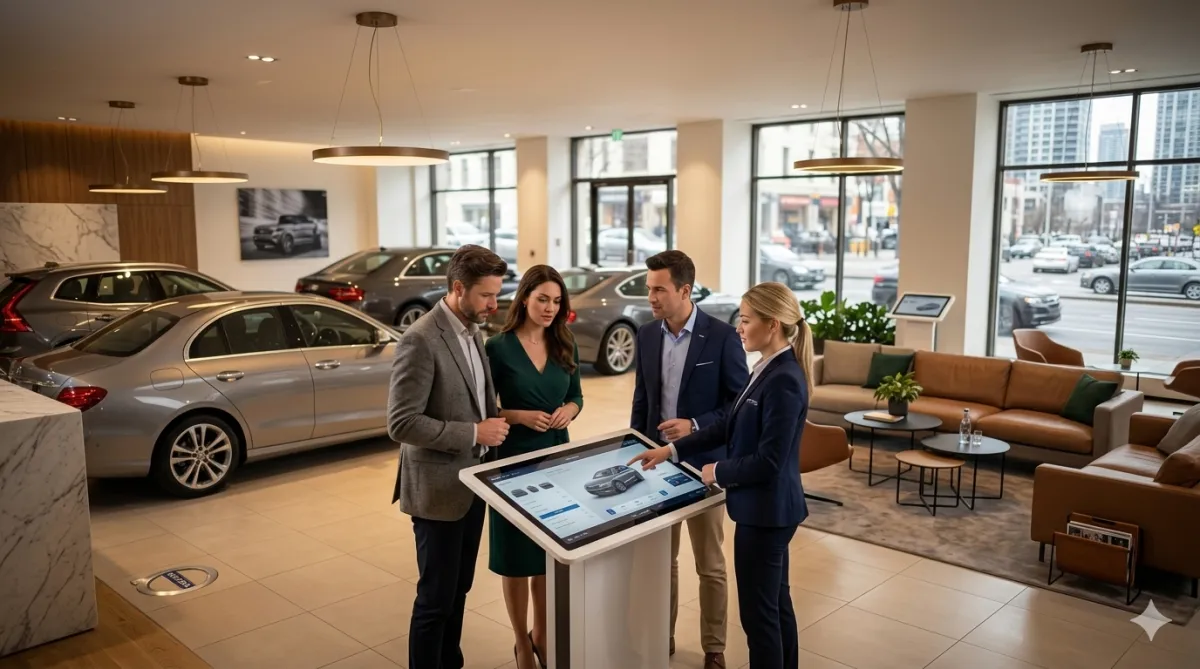
10 Reasons Your Dealership’s VDPs Aren’t Converting High-Intent Shoppers (And How to Fix It)
Mike Snellenberger , April 21, 2026
Discover the 10 key reasons your dealership’s Vehicle Detail Pages (VDPs) fail to convert high-intent shoppers into leads. From slow load speeds and poor mobile experience to weak trust signals and co..
Read our latest blogs

7 Technical Pitfalls in Your Google Vehicle Listing Ads (VLAs) Costing You Sales
Stop treating your Google Vehicle Listing Ads (VLAs) like a "set it and forget it" experiment. While VLAs are arguably the most powerful tool in a dealership's digital arsenal, most Marketing Directors are unknowingly bleeding budget through technical cracks in their setup.
When your VLA strategy fails, it’s rarely because people aren't looking for cars. It’s because your technical infrastructure is lying to Google, and Google is punishing your ROI for it. If your cost-per-lead is climbing while your VDP (Vehicle Detail Page) views are stagnating, you aren't facing a market problem: you’re facing a data problem.
Here are the seven technical pitfalls currently sabotaging your automotive marketing strategy and how to fix them before your next month’s budget disappears.
1. The Lethal Price Mismatch: Feed vs. Website
Price discrepancies are the fastest way to get your account flagged or suspended. Google’s bots are constantly crawling your website to verify that the price in your inventory feed matches the price on your VDP.
If your feed says a 2022 Ford F-150 is $38,500, but your website’s dynamic pricing has updated it to $39,200, Google sees a bait-and-switch. Even if it’s a minor update, Google applies "Price Quality" checks. When the data doesn't align, the vehicle is suppressed. You’re essentially paying for "ghost inventory" that will never show up in a high-intent search.
The Fix: Stop relying on daily manual uploads. Implement the Google Content API to ensure real-time synchronization between your DMS (Dealer Management System) and your Merchant Center. If you can’t use the API, you must schedule your feed fetches to happen immediately after your inventory pricing updates are pushed live.
2. Broken Link Templates and VIN Errors
Your VLA is only as good as the path it creates for the shopper. A common technical failure occurs within the "Link Template" in your Merchant Center feed. If your link structure is broken, or if your VINs contain trailing spaces or non-standard characters, the user lands on a 404 page.
Worse yet, some feeds fail to pass the correct vehicle_id. This results in a shopper clicking an ad for a specific Toyota Camry and landing on your general "New Inventory" search results page. This friction kills conversions. Every extra click a user has to make to find the car they just saw in an ad reduces your conversion rate by double digits.
The Fix: Audit your link_template attribute. Ensure it includes the correct UTM parameters and VIN placeholders so the user lands exactly where they expect. For a deeper dive into why your traffic isn't converting, check out why your dealership marketing is not moving cars.
3. Misclassification: The "SUV or Sedan?" Identity Crisis
Google’s AI is smart, but it’s not a mind reader. If your feed is missing the body_style or vehicle_type attributes—or if they are misclassified—your ads appear in the wrong auctions.
Imagine bidding on "fuel-efficient sedans" only for Google to serve your gas-guzzling full-size SUV because the feed was tagged incorrectly. You are essentially paying top dollar to show the wrong product to the right person. This drives up your CPC (Cost Per Click) and tanks your Quality Score because your ad relevance is non-existent.
The Fix: Scrub your inventory data. Ensure every unit has mandatory attributes: Make, Model, Year, Trim, Mileage, and Body Style. High-quality data leads to lower costs. This is the baseline of any effective car dealership marketing plan.
4. Geographic Waste: The Store Code Failure
VLAs are inherently local. However, many dealerships fail to properly configure their "Store Codes" within the Google Business Profile and the Merchant Center. If these codes don't match exactly, Google cannot verify that the vehicle is physically located at your dealership.
The result? Google widens your targeting to a national or regional level to find "matches," showing your inventory to shoppers 300 miles away who have zero intention of visiting your showroom. You are subsidizing the research of out-of-state buyers while your local competitors capture the nearby high-intent traffic.
The Fix: Standardize your Store Codes. Use a consistent naming convention across your Business Profile and your inventory feed. Tighten your radius targeting to focus on your primary market area (PMA) to ensure every dollar spent is a dollar toward a deal.
5. Using the Wrong Bid Strategy for Inventory
Are you still using "Maximize Clicks" for your VLAs? If so, stop.
"Maximize Clicks" tells Google you want volume, regardless of quality. This invites "fat-finger" clicks, bots, and window shoppers who have no intention of submitting a lead or visiting the lot. In the automotive world, clicks don't pay the bills: appointments do.
When you use a click-based strategy, you're training Google’s algorithm to find people who like to click on pictures of cars, not people who are ready to buy them. This is a primary reason why many automotive marketing strategies fail to scale profitably.
The Fix: Switch to a conversion-based bid strategy like "Maximize Conversions" or "Target ROAS" (Return on Ad Spend). However, this only works if your conversion tracking is flawless. If you aren't feeding the algorithm high-quality data, the machine learning will fail.
6. Conversion Tracking and "Ghost" Leads
Most dealerships track "Form Submissions" as their primary conversion. This is a technical pitfall. If your tracking is set to trigger on a "Submit" button click rather than a "Thank You" page load or a server-side event, your data is inflated.
If a user clicks "Submit" three times because your site is slow, you see three conversions in Google Ads. This tricks the algorithm into over-bidding for low-quality traffic. Furthermore, if you aren't tracking phone calls and "Get Directions" clicks as part of your VLA performance, you are missing 50% of your attribution data. You can't optimize what you don't measure.
The Fix: Implement a robust conversion framework using Google Tag Manager. Track high-intent actions: phone calls over 60 seconds, text starts, and trade-in tool completions. Link these back to your VLAs to see the true ROI.
7. The "Catch-All" Campaign Trap
The final technical error is structural. Many Marketing Directors lump their entire inventory—new, used, certified pre-owned, luxury, and economy—into one single VLA campaign.
By doing this, you are giving Google a single budget to manage across vastly different search intents. Your high-margin luxury SUVs end up competing for budget with your $15,000 trade-ins. Usually, the lower-priced vehicles eat the budget first because they have higher search volume, leaving your most profitable inventory invisible.
The Fix: Segment your campaigns. Create separate VLA campaigns for:
New vs. Used
High-Turnover vs. Aged Inventory
Top-Tier Models (e.g., Trucks vs. Sedans)
This allows you to allocate specific budgets to the inventory that needs it most and adjust your bidding based on the profit margin of the vehicle.
Stop Guessing and Start Optimizing
Technical errors in your VLAs are essentially "hidden taxes" on your marketing budget. You might be getting traffic, but you're paying a premium for inefficiency.
In a market where every basis point of margin counts, you cannot afford to have a disconnected feed or a broken attribution model. These technical pitfalls are the difference between a dealership that dominates its local market and one that wonders why its digital spend never results in sold units.
If you’re tired of technical jargon and want a partner who focuses on the bottom line, it’s time to rethink your strategy. Learn more about our CMO services and how we can audit your technical setup to stop the bleed.
Don't let another month of "good enough" marketing cost you dozens of sales. Fix your feed, tighten your targeting, and turn your VLAs into the high-performance engine they were meant to be. If you're ready to get serious about your results, contact us today and let’s look at the data together.

MENU
Contact
© Copyright 2026. The Fractional CMO Team. All rights reserved. Privacy Policy
Facebook
Instagram
X
LinkedIn
Youtube